


Why does your child hold a crayon differently? Understanding pencil grip development
A child’s pencil grip develops gradually. It’s not something they need to perfect overnight. Before little hands can control a pencil, they need chances to get stronger, coordinate their fingers and explore different movements through play.
Why does pencil grip matter?
Holding a crayon or pencil involves several small muscles and coordinated movements in the hand and fingers. A comfortable, functional grip helps children control their tools, make different marks, follow lines and share ideas on paper.
The same hand control supports many everyday activities, building the finger strength, hand-eye coordination and control used later for drawing and writing.
The grip growth scribble studio
Pick a stage to see how a child’s grip grows, then scribble on the pad. The crayon changes with the stage: big sweeping marks first, smaller and more precise ones later.
Draw anything: lines, circles, a picture, a scribble.
Five fun activities for comfortable pencil control
Before asking for letters or long pencil sessions, build hand strength and coordination through play. Swipe through the five.
Play with playdough
Squeeze, roll, pinch and shape!
Give your child some playdough and encourage them to squeeze it, roll it into long shapes, flatten it or pinch off small pieces. Invite them to make pretend food, animals or simple objects.
What children practise
- Finger and hand strength
- Pinching movements
- Using individual fingers
- Coordinating both hands
These movements build the muscles and control used for handling small objects and drawing tools.
Pick, sort and transfer
Can your child move objects using just their fingertips?
Prepare large, age-appropriate objects such as chunky blocks or large sorting pieces, and ask your child to place them into different containers. For children who are ready, add child-safe tongs to move larger objects between containers, under supervision.
What children practise
- Finger control
- Gripping and releasing
- Hand-eye coordination
- Concentration and accuracy
Avoid small loose objects that could pose a choking risk, particularly for children under three.
Draw on a vertical surface
Let’s take drawing off the table!
Attach a large sheet of paper securely to a suitable vertical surface, or use an easel. Give chunky crayons or washable markers and invite your child to draw freely: lines, circles, patterns or pictures of favourite things.
What children practise
- Coordinating arm, wrist and hand
- Controlling drawing tools
- Exploring different directions
- Confidence through creative expression
A vertical surface lets children use their arms and hands in a different position.
Tear, fold and create
Turn ordinary paper into something special!
Provide suitable paper and encourage your child to tear it into pieces, fold it and arrange the pieces into a simple collage: a flower, a house, an animal or an abstract picture.
What children practise
- Using both hands together
- Controlling finger movements
- Applying different levels of pressure
- Coordination and creativity
Let them try different paper textures and shapes instead of expecting a perfect picture.
Colour with short crayons
Sometimes, smaller tools make drawing easier!
Offer short, chunky crayons that are comfortable for little hands. Encourage colouring, simple shapes or their own illustrations, and don’t insist they stay inside every line. Short crayons can encourage more active fingertips, though the best tool depends on your child’s comfort and ability.
What children practise
- Holding and controlling a drawing tool
- Adjusting finger movements
- Exploring different drawing directions
- Confidence in creative activities
Should parents correct an unusual grip?
It’s tempting to adjust your child’s fingers every time they pick up a crayon differently. But constant correcting can make drawing feel like a hard task instead of an enjoyable one. Try these instead.
A gentle note: if your child regularly has pain, significant tiredness or ongoing difficulty holding or controlling writing tools, or struggles with other everyday hand movements, consider talking to a qualified healthcare professional or occupational therapist.
What does KLC Preschool do?
KLC Preschool and Childcare is an early education centre in Johor Bahru. We believe children should learn and express themselves in many different ways.
Through the Reggio Emilia-inspired “100 Languages” approach, children explore ideas beyond traditional reading and writing. Drawing, painting, building, music, movement and creative experiences are all ways for children to share what they discover.
KLC Childcare Programme
Direct emphasis on sensory exploration, fine motor development and hand-eye coordination. These early experiences let children explore materials and practise different hand movements.
KLC Preschool Programme
Experiential, project-based learning. Through art and craft, cooking, thematic exploration and creative projects, children experiment with materials, express ideas and grow in confidence.
Every drawing, creation and hands-on experience is another way to discover what little hands can do.
Ask about our programmesKLC TV
Pick a channel and press play. The videos play right here on the page.
Contact KLC Preschool
Visit any of our three branches in Johor Bahru. Each button goes straight to that branch.
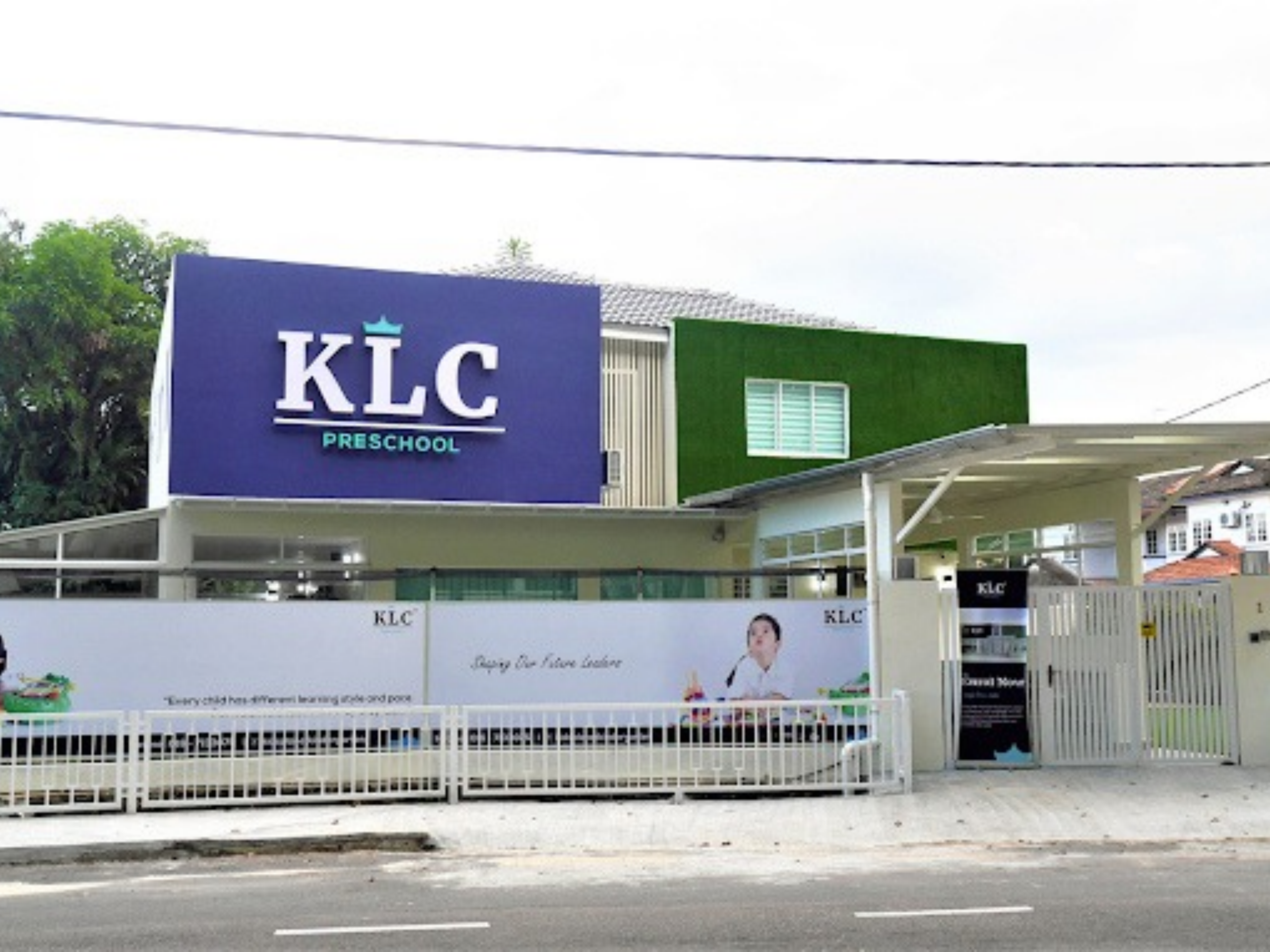
KLC Preschool Delima
Most experienced team. Every child’s pace and style is seen and nurtured.
- +60 16-713 3875
- 1, Jalan Delima 2/11,
Taman Delima 2,
81100 Johor Bahru, Johor Darul Ta’zim.

KLC Preschool Desa Tebrau
Largest campus. A whole 3rd floor for all-weather indoor active play and movement.
- +60 16-770 1052
- 1, Jalan Harmonium 23/13,
Taman Desa Tebrau,
81100 Johor Bahru, Johor Darul Ta’zim.

KLC Preschool Molek
Founding centre. Over 16 years of heritage, home to ASEAN Scholarship recipients.
- +60 13-792 7399
- No. 32, Jalan Molek 1/4,
Taman Molek,
81100 Johor Bahru, Johor Darul Ta’zim.
Questions parents ask us
Can’t find yours? Message us on WhatsApp at +60 18-381 8830 and we’ll gladly help.
Why does my child hold a crayon with their whole fist?
That’s the whole-hand grip, an early way of making first marks. Young children wrap their fingers around the crayon and move mostly their arm and shoulder, exploring what happens when a crayon moves across paper. Grip develops gradually and doesn’t need to be perfected overnight.
Does pencil grip really matter?
A comfortable, functional grip helps children control drawing and writing tools, make different marks and follow lines. What matters most is whether they can move the tool comfortably, control their marks and take part without unnecessary strain.
How does pencil grip develop?
Commonly from a whole-hand grip, to using fingers and hand together, to developing finger control with the thumb, index and middle finger, and then a more refined grip. These are common patterns, not strict milestones, and some children use variations that work well for them.
What are tripod and quadrupod grips? Does my child need one?
A tripod grip uses the thumb, index finger and middle finger. A quadrupod grip uses four fingers to support the tool. Both can be functional, and children don’t all need to hold their pencils the same way, as long as they can control the tool without excessive tension or discomfort.
Should I correct my child’s grip?
Constant correcting can make drawing feel like a hard task. Try comfortable tools, encourage relaxed movements, give plenty of practice through play, avoid rushing handwriting and focus on comfort and function. If your child has pain, significant fatigue or ongoing difficulty with writing tools or everyday hand movements, consider talking to a qualified healthcare professional or occupational therapist.
Which activities help build comfortable pencil control?
Playdough, picking and sorting large objects, drawing on a vertical surface, tearing and folding paper, and colouring with short chunky crayons all build finger strength, coordination and control. Avoid small loose objects, especially for children under three.
Which crayons or tools are best for young children?
Choose tools that suit your child’s hand size. Chunky or shorter crayons may be easier for some younger children, and short crayons can encourage more active fingertips, but the most suitable tool depends on your child’s comfort and ability.
How does KLC Preschool encourage creative, hands-on learning, and can I visit?
KLC follows the Reggio Emilia-inspired “100 Languages” approach, so drawing, painting, building, music, movement and creative experiences are all ways to express ideas. The Childcare Programme (18 months to 3 years) focuses on sensory exploration and fine motor development, and the Preschool Programme (4 to 6 years) uses project-based learning, in small classes with caring educators. You’re welcome to visit our Delima, Desa Tebrau or Molek branch. Use the buttons above to message or call the branch you prefer.
From the first scribble to the first letter
Every little mark is part of a bigger learning journey. Come and see how KLC gives little hands the time and the chances to grow at their own pace.