


How Play Helps Children Develop Problem-Solving Skills?
Long before children can solve equations on paper, they learn to navigate challenges, test ideas, and adapt to setbacks through purposeful play. Discover how KLC Preschool & Childcare transforms everyday curiosity into lifelong critical thinking for children aged 18 months to 6 years.
📅 Book a School Tour Explore Our Programmes →
Quick Summary: How Does Play Build Problem-Solving Skills?
Play activates a child’s executive brain functions—working memory, flexible thinking, and self-control—in a low-stress environment. Research shows hands-on play boosts creative problem-solving by up to 35% compared to rote memorisation by guiding children through a natural 4-step inquiry cycle:
What Happens in a Child’s Brain When They Solve Problems Through Play?
Many parents wonder whether playtime takes away from “real” academic preparation. In early childhood neurodevelopment, play is the highest form of cognitive training.
Between 18 months and 6 years old, a child’s prefrontal cortex develops rapidly. Rather than memorising isolated facts through worksheets, play requires children to make active decisions in real time.
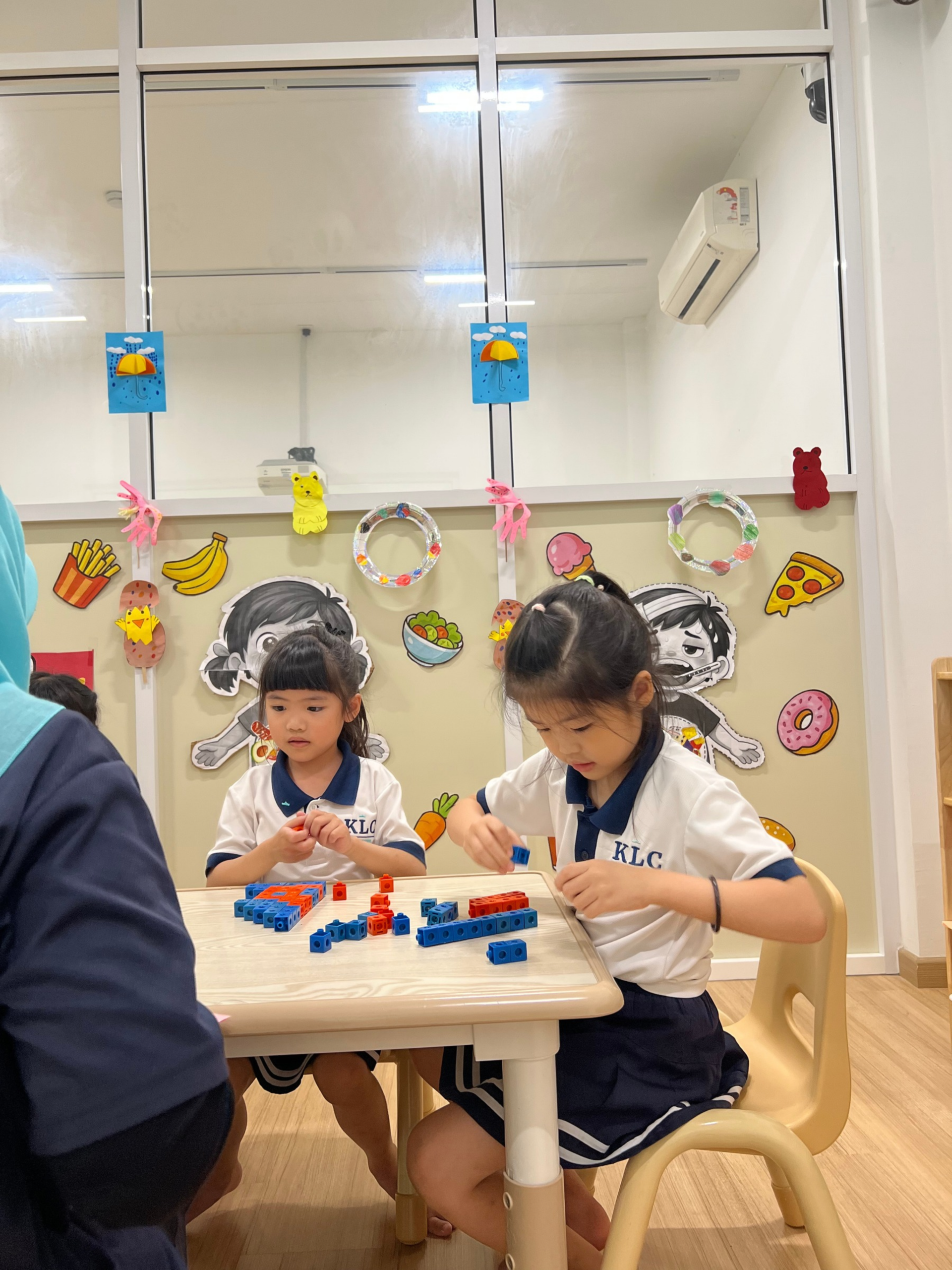
5 Core Problem-Solving Mechanisms Built Through Play
Cause-and-Effect Reasoning
Stacking blocks that topple or mixing water and sand teaches children why something happened and how changing one variable changes the outcome.
Divergent Thinking
Open-ended puzzles and dramatic play have no single “right” answer, so children learn to brainstorm multiple pathways to a goal.
Emotional Resilience
When a tower falls, play is a safe space to manage disappointment, regulate emotions, and try again.
Social Negotiation
Small-group play teaches sharing limited resources, communicating boundaries, compromising, and resolving disagreements.
Spatial & Symbolic Representation
Turning an idea into a structure, drawing, or gesture builds the abstract reasoning needed for primary school maths and reading.
How Do Problem-Solving Play Activities Evolve from 18 Months to 6 Years?
At KLC Preschool & Childcare, our curriculum adapts how play is facilitated based on your child’s developmental milestone:
| Developmental Stage | Primary Play Type | Problem-Solving Skill Developed | How KLC Facilitates It |
|---|---|---|---|
| Toddlers (18 Months – 3 Years) KLC Childcare Programme | Sensory & Exploratory Play (sorting shapes, water/sand play, fine-motor puzzles) | Spatial awareness & trial-and-error: figuring out how objects fit together, object permanence, and basic cause-and-effect. | Small class sizes where caring educators guide sensory exploration, fine-motor milestones, and early English through play & songs. |
| Preschool & Pre-Primary Programme (4–6 Years Old) KLC Preschool Programme | Through constructive play, role-playing, creative movement, group projects and phonics activities, children develop essential skills for lifelong learning and Primary 1 readiness. | Planning & categorisation: following multi-step ideas, predicting outcomes, and using language/gestures to express solutions. Collaboration & Leadership: Working in teams, negotiating roles and solving problems together. | Reggio Emilia “100 Languages” approach combined with Sign Language to help children articulate thoughts before frustration sets in. Trilingual Immersion in English, Mandarin and Bahasa Malaysia to prepare children for SJK(C), SK and international schools. |
How Does KLC Preschool Turn Everyday Play into Future-Ready Thinking?
At KLC Preschool Johor Bahru, we believe early education is about building confidence, curiosity, and true understanding—not rote memorisation. Here is how our learning ecosystem turns play into powerful problem-solving ability:
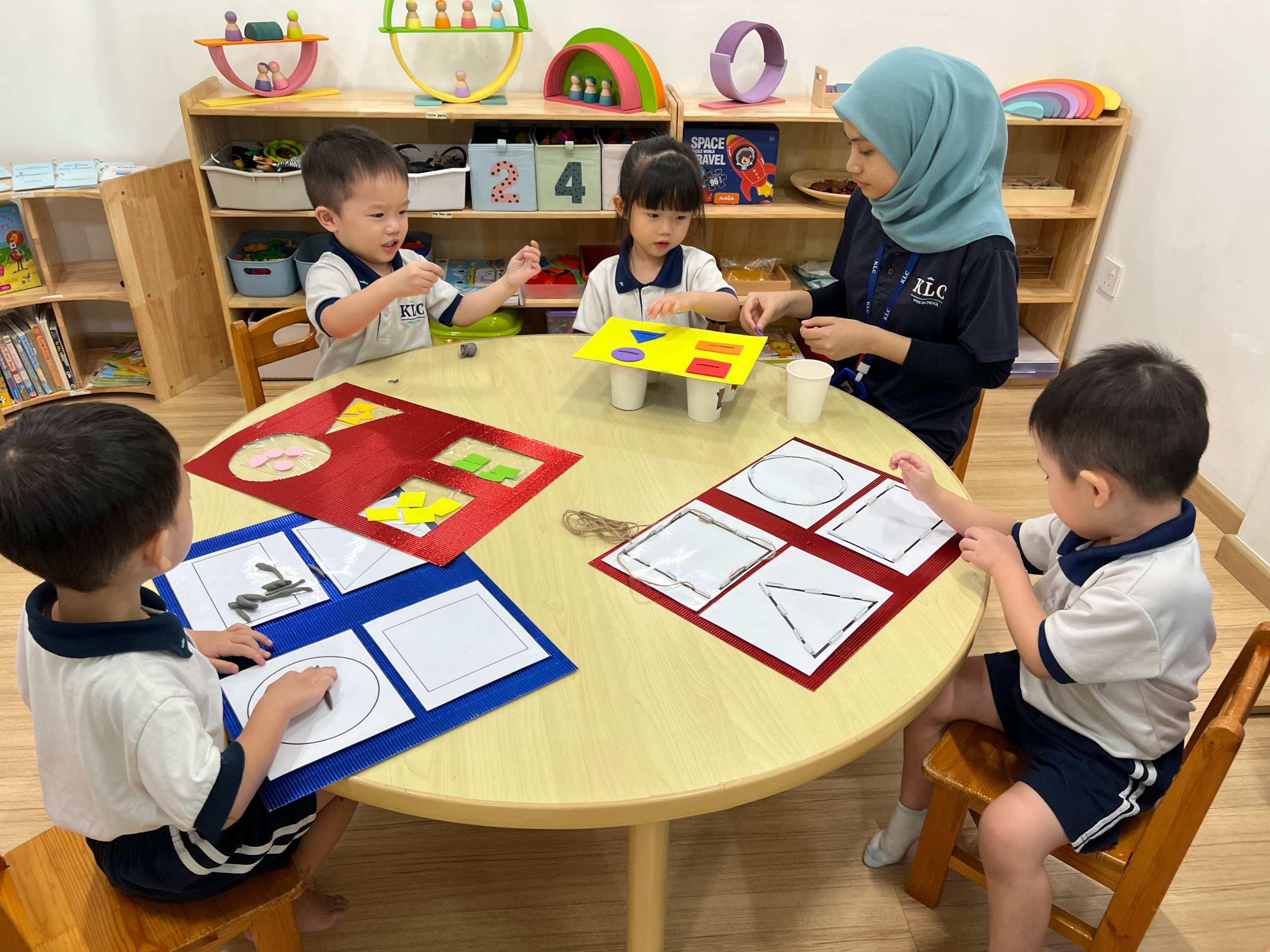
1. The Reggio Emilia “100 Languages” Approach
Inspired by the Reggio Emilia philosophy, we recognise that children have “100 languages” to explore, question, and solve problems—through building, drawing, music, movement, dramatic play, and dialogue. Instead of handing over ready-made answers, our educators act as co-explorers who ask open-ended questions: “Why do you think the bridge leaned over? What could we use to make it stronger?”
2. Malaysia’s Exclusive Sign Language Curriculum
Often, young children fail to solve problems simply because they cannot yet verbalise their frustration or ideas. KLC is Malaysia’s only preschool that systematically integrates Sign Language into daily lessons. Pairing physical movement with spoken words activates both hemispheres of the brain, helping children:
- Retain vocabulary and complex concepts faster
- Communicate needs and negotiate with peers confidently
- Strengthen focus, working memory, and logical sequencing

3. Small Class Sizes
In oversized classrooms, quiet children get overlooked and frustrated children get told what to do. With small classes, our teachers practise scaffolding—stepping in with just enough guidance for a child to overcome a hurdle on their own.
4. Active Movement & Motor Challenges
Physical play is directly linked to brain development. Daily movement games, obstacle challenges, and fine-motor activities across every KLC campus help children sharpen spatial awareness, balance, and quick decision-making.
5. Trilingual Experiential Learning
Switching between English, Mandarin, and Bahasa Malaysia during play-based projects strengthens cognitive flexibility, preparing children for Primary Year 1 (SJKC, SK, or International Schools).
3 Ways Parents Can Encourage Problem-Solving Through Play at Home
Want to reinforce what your child experiences at KLC? Try these three educator-approved strategies:
Practise the “5-Second Pause” Before Helping
When your child struggles with a puzzle piece, zipper, or toy, wait 5 seconds before stepping in. Space to wrestle with a mild challenge builds self-efficacy.
Ask “What If” Questions Instead of Giving Instructions
Replace “Put the big block at the bottom” with “What do you think will happen if we put the biggest block at the very bottom?”
Celebrate the Process, Not Just the Result
Praise their strategy (“I love how you tried three different ways to fit that piece!”) rather than just calling them “smart.” This builds a growth mindset.
Frequently Asked Questions
How does play-based learning prepare children for primary school academics?
Play-based learning builds executive function—attention control, working memory, and flexible thinking—which is the foundation for reading, mathematics, and science. At KLC Preschool, we combine the Reggio Emilia approach, Master Key Phonics, and trilingual immersion (English, Mandarin, Bahasa Malaysia) so graduates enter SJKC, SK, or international primary schools with strong literacy and independent problem-solving skills rather than reliance on rote memorisation.
What are the best types of play for developing problem-solving skills in preschoolers?
The four most effective types are:
- Constructive Play: building with blocks, magnetic tiles, or recycled materials to learn engineering and spatial balance.
- Sensory & Exploratory Play: experimenting with textures, water, and nature to understand cause and effect.
- Dramatic / Role Play: acting out real-world scenarios to practise social negotiation and empathy.
- Rule-Based & Movement Games: obstacle courses or group games that build impulse control and strategic planning.
How does Sign Language help preschool children solve problems better?
Research shows that pairing physical hand gestures with spoken words strengthens neural pathways for memory and comprehension. At KLC Preschool—Malaysia’s only kindergarten with a systematic Sign Language curriculum—children use sign language alongside speech to visualise concepts, express emotions clearly during peer conflicts, and process multi-step instructions more effectively.
At what age can my child join KLC Preschool & Childcare in Johor Bahru?
KLC welcomes children across two tailored stages:
- KLC Childcare Programme (18 months – 3 years): sensory exploration, fine-motor development, social-emotional foundations, and 5-Colour Balanced Nutrition Meals.
- KLC Preschool Programme (4 – 6 years): experiential project-based learning, trilingual mastery, Sign Language integration, and comprehensive Primary Year 1 readiness.
Ready to Watch Your Child Grow Into a Confident Problem Solver?
Seeing is believing. Schedule a School Tour at any of our 3 Johor Bahru campuses to explore our classrooms, meet our educators, and experience the KLC learning environment in person.

📍 KLC Preschool Taman Molek
Our original campus with over 16 years of early childhood heritage and home to ASEAN Scholarship recipients.

📍 KLC Preschool Desa Tebrau
Our biggest centre, featuring an entire 3rd floor dedicated to an all-weather indoor active play and movement space.
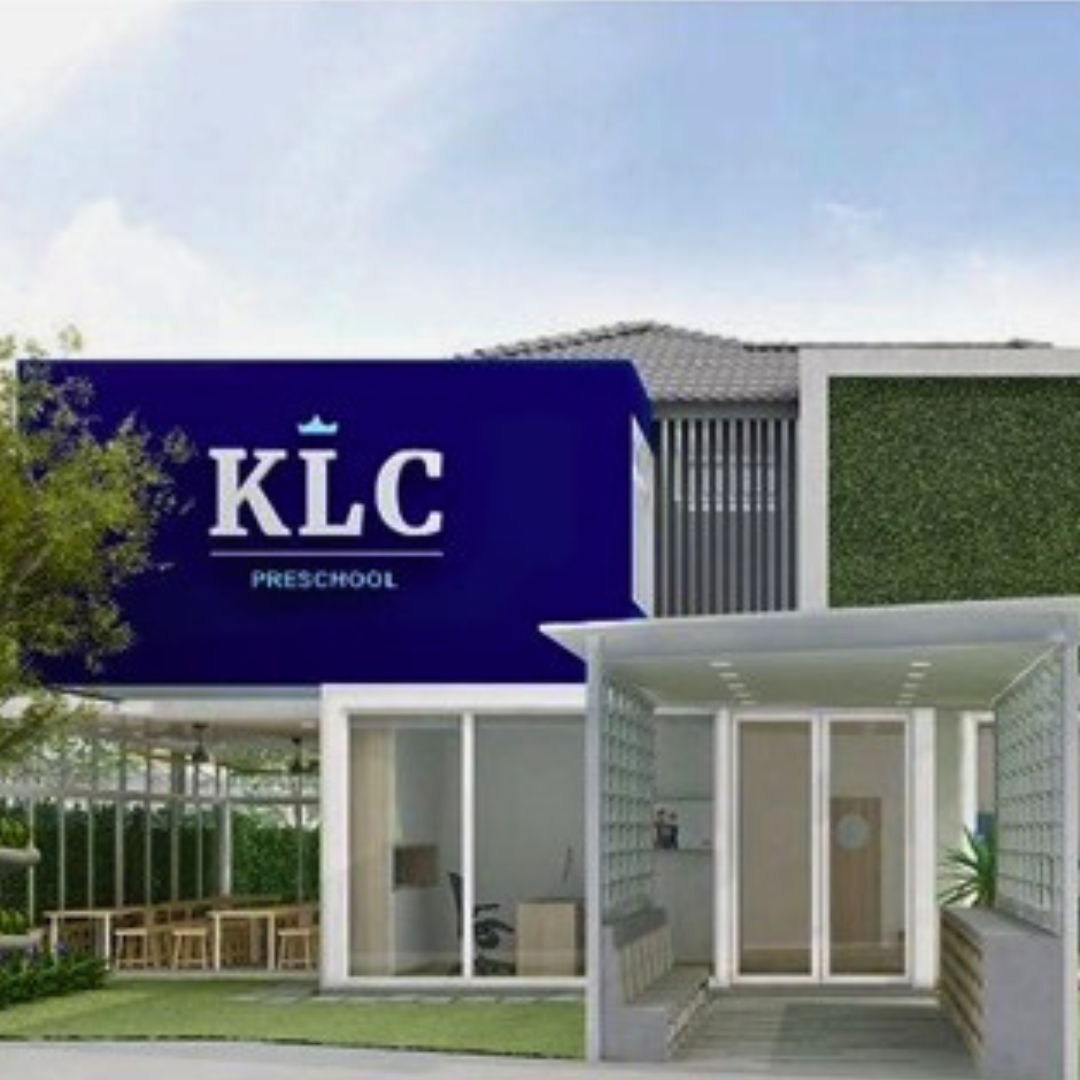
📍 KLC Preschool Taman Delima
Home to our most seasoned teaching team, where every child’s unique learning pace and style is seen, understood, and individually nurtured.