


How Do Children Learn Vocabulary Faster? Sign Language vs. Verbal Repetition Explained
Children remember new words best when more than one sense is involved. See how sign language and spoken repetition work together in a trilingual classroom.
WhatsApp Us to Book a Free Campus Tour
The short answer: Children learn vocabulary best when several senses work at once. Spoken repetition builds pronunciation through hearing. Sign language adds movement and visual cues, which strengthens memory. Together, children understand, remember and use new words significantly faster than by hearing them repeated alone.
Why This Matters for Your Child’s Development
In the early years, a child’s understanding runs ahead of their vocal development. Toddlers know exactly what they want but cannot yet say it. Relying only on spoken repetition can lead to frustration and tantrums.
As children reach the preschool years, rote memorisation (repeating words aloud) often leads to shallow learning, and words are quickly forgotten. A multi-sensory approach helps your child understand language rather than simply copy it, which builds confident communication and a deeper love of learning.

The Science of Muscle Memory
Understanding how the brain handles information shows why mixing methods works.
Verbal Repetition
This traditional method builds phonetic awareness. It relies on hearing alone, so for visual or kinesthetic learners it activates only one part of the brain.
Sign Language
Pairing spoken words with hand gestures strengthens neuroplasticity. When a child says a word while signing it, three areas of the brain are active:
- Auditory cortex: hearing
- Visual cortex: seeing the sign
- Motor cortex: making the movement
This multi-sensory stimulation builds a dense web of neural pathways, and the physical action becomes a “muscle memory” trigger. Later, if a child struggles to recall a word, simply moving their hands can unlock the memory of the spoken vocabulary.
What This Looks Like at KLC Preschool
At KLC Preschool & Childcare, children do not have to choose between learning styles. As Malaysia’s exclusive preschool integrating Sign Language, our educators use a dual-action approach across our trilingual curriculum: English, Mandarin and Bahasa Malaysia.
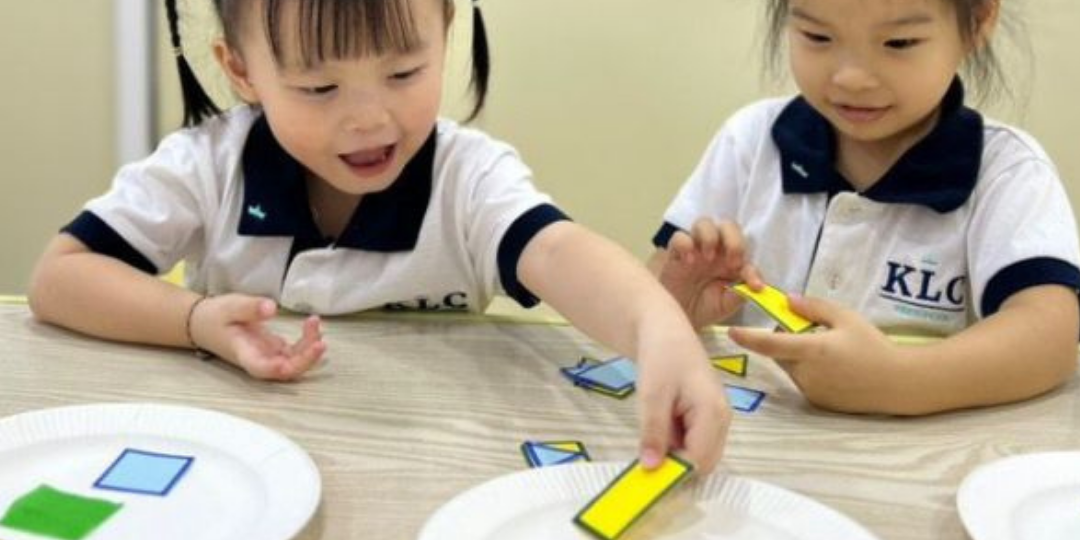
The Foundation
In our Childcare Programme, we introduce simple American Sign Language (ASL). Toddler motor skills develop faster than speech, so ASL lets them express their needs clearly, such as signing “more” or “milk”. This greatly reduces early frustration.
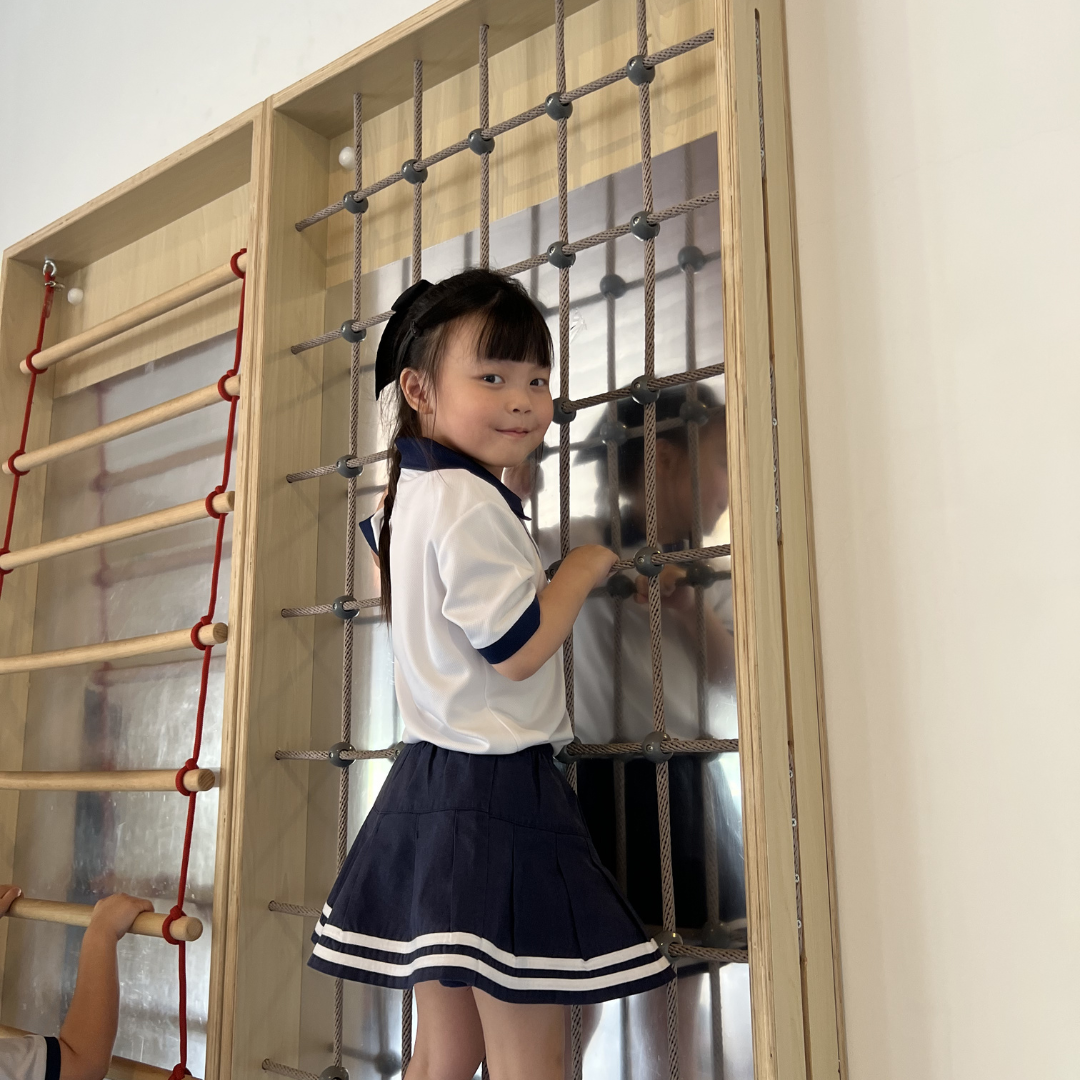
Building Muscle Memory
In our Preschool Programme, we continuously mix sign language with verbal repetition. When learning an emotion, children do more than point at a flashcard. They perform the ASL gesture for “happy” while saying:
开心 (Mandarin) | Gembira (Bahasa Malaysia) | Happy (English)
Guided by the Reggio Emilia ‘100 Languages’ philosophy, this experiential learning locks trilingual vocabulary into long-term memory.
Frequently Asked Questions
Does teaching sign language delay my child’s spoken language?
No. Research shows the opposite. Because we always pair gestures with spoken words, sign language acts as a bridge to speech. It encourages verbal communication and speeds up overall vocabulary growth.
Is it too late to start if my child is already 4 or 5 years old?
Not at all. Toddlers use sign language to temporarily replace speech, while older preschoolers use it to build muscle memory for complex trilingual vocabulary. It stays an effective tool for long-term retention right up to primary school.
Will my child be ready for primary school?
Yes. Our trilingual immersion and experiential sign language curriculum prepare children for SJKC, national (SK) and international schools. Graduates enter Year 1 as confident communicators.
Do you offer visual or auditory learning support?
Our curriculum blends auditory learning (verbal repetition) with visual and kinesthetic learning (sign language and active play), so every type of learner is supported in one classroom.
Helpful Resources
- Explore our KLC Childcare ProgrammeFor children aged 18 months – 3 years
- Learn more about the KLC Preschool ProgrammeFor children aged 4 – 6 years
- Discover our Reggio Emilia ‘100 Languages’ teaching philosophyHow experiential learning shapes our classrooms
- Find your nearest KLC branchTaman Molek, Desa Tebrau or Taman Delima
See the KLC Difference in Person
Ready to give your child the best start? Message our team on WhatsApp to arrange a free placement assessment and book a personalised campus tour at your preferred Johor Bahru branch.
WhatsApp Us to Book a Free Campus Tour